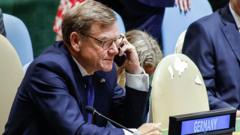
The United Nations Security Council has dealt a significant blow to Germany's diplomatic efforts, as the country's bid for a non-permanent seat was rejected. According to Johann Wadephul, a key figure in Germany's bid, the country's support for Ukraine was a major factor in its defeat. Wadephul stated that it was "no secret" that Russia had actively worked to undermine Germany's chances, stirring up sentiment against the country's candidacy.
The outcome of the vote is seen as a significant setback for Germany's foreign policy ambitions, and highlights the ongoing tensions between Germany and Russia. Germany has been a vocal supporter of Ukraine in the face of Russian aggression, and this has clearly not gone down well with the Russian government. The fact that Russia was able to mobilize opposition to Germany's bid is a testament to the country's enduring influence within the UN, despite its controversial actions on the international stage.
The rejection of Germany's bid is also likely to have significant implications for the country's relationships with other nations. Germany's support for Ukraine has been seen as a key aspect of its foreign policy, and the country's defeat in the UN Security Council vote may be perceived as a weakening of its position on this issue. As such, the German government will likely face increased pressure to reassess its diplomatic strategy and find new ways to promote its interests on the international stage.
The UN Security Council vote has also highlighted the deep divisions within the international community, with Russia and its allies on one side and Western nations like Germany on the other. As the global balance of power continues to shift, the UN Security Council is likely to remain a key battleground for diplomatic influence and power. The outcome of the vote is a reminder that, even in the face of significant opposition, countries like Germany must continue to stand up for their values and promote their interests on the international stage.




Comments (0)