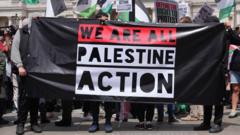
The UK government has come under fire for its decision to ban Palestine Action, a pro-Palestinian activist group, after the High Court ruled that the ban was unlawful. Despite the court's decision, the government is standing by its action, arguing that overturning the ban would limit its counter-terrorism powers. This move has sparked a heated debate about the balance between national security and civil liberties, with many critics accusing the government of overstepping its authority.
The High Court's ruling was seen as a significant victory for Palestine Action, which had challenged the government's decision to ban the group under counter-terrorism laws. The court found that the government had not provided sufficient evidence to justify the ban, and that the decision was therefore unlawful. However, the government has refused to back down, arguing that the ban is necessary to prevent extremist activity and protect national security. This stance has been met with skepticism by many, who argue that the government is using counter-terrorism laws as a pretext to suppress legitimate political activism.
The government's decision to defend the ban has been widely criticized by human rights groups and civil liberties organizations, who argue that it sets a dangerous precedent for the suppression of free speech and political dissent. Many have pointed out that Palestine Action is a peaceful organization that has been involved in non-violent protests and campaigns, and that the government's actions are therefore unjustified. The controversy has also sparked a wider debate about the use of counter-terrorism laws, with many arguing that they are being used to target minority groups and suppress dissenting voices.
As the government continues to defend its decision to ban Palestine Action, the issue is likely to remain a contentious one. The case has highlighted the tension between national security and civil liberties, and has raised important questions about the limits of government power. With the government showing no signs of backing down, it remains to be seen how the situation will unfold, and what implications it will have for the future of political activism and free speech in the UK.



Comments (0)