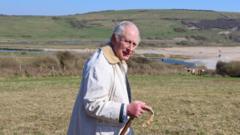
The ambitious project to create a continuous coastal path along England's shoreline, named after King Charles, is facing significant hurdles in its implementation. According to Natural England, the organization tasked with overseeing the development of the path, maintaining uninterrupted access to certain stretches of the coast in the south will be a considerable challenge. This revelation has sparked concerns about the feasibility of the project, which aims to provide the public with unfettered access to the country's stunning coastline.
The main obstacles to keeping the path open are related to private land ownership, environmental sensitivity, and physical barriers such as cliffs and estuaries. In some areas, the path will need to traverse private property, which may require negotiations with landowners to secure access rights. Additionally, certain sections of the coast are protected habitats for rare wildlife, and the path's construction will need to be carefully planned to avoid disrupting these sensitive ecosystems. Natural England must balance the need to provide public access with the requirement to preserve the natural beauty and biodiversity of the coastline.
Despite these challenges, Natural England remains committed to delivering the King Charles's coastal path, which is expected to be completed by 2026. The organization is working closely with local authorities, landowners, and community groups to address the access issues and find solutions that benefit both the public and the environment. The path is anticipated to be a major tourist draw, boosting local economies and promoting outdoor recreation, while also showcasing the country's rich cultural heritage and natural beauty. As the project progresses, it will be essential to monitor its impact on the environment and local communities to ensure that the benefits of the path are shared by all.
The success of the King Charles's coastal path will depend on the ability of Natural England and its partners to navigate the complex web of interests and challenges involved. By engaging with stakeholders, addressing access concerns, and adopting a sensitive approach to the path's construction, it is possible to create a world-class coastal path that enhances the public's experience of England's coastline while protecting its unique character and natural resources. As the project moves forward, it will be exciting to see how these challenges are overcome and the path begins to take shape, providing a lasting legacy for the country and its people.




Comments (0)