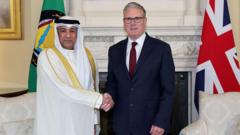
The United Kingdom has successfully negotiated a significant trade agreement with six Gulf states, valued at £3.7 billion. This deal is expected to have far-reaching implications for British businesses, as it will eliminate an estimated £580 million worth of tariffs from British exports to these countries. The six Gulf states involved in the agreement are Bahrain, Kuwait, Oman, Qatar, Saudi Arabia, and the United Arab Emirates. The removal of tariffs is anticipated to boost British exports, particularly in the areas of food, drink, and automotive products.
The trade deal has been hailed as a major achievement by the UK government, which has been actively seeking to establish new trade relationships following its departure from the European Union. The agreement is seen as a key component of the UK's strategy to increase its global trade presence and reduce its reliance on European markets. However, the deal has also been criticized by human rights groups, who argue that the UK is compromising its values by engaging in trade with countries that have questionable human rights records. These groups have expressed concerns that the deal may embolden these countries to continue their human rights abuses, without fear of repercussions from the international community.
Despite the criticisms, the UK government has defended the trade deal, arguing that it will help to create new jobs and stimulate economic growth in the UK. The government has also emphasized that the agreement includes provisions for cooperation on issues such as labor rights, environmental protection, and good governance. However, the effectiveness of these provisions in addressing human rights concerns remains to be seen. As the deal comes into effect, it will be closely monitored by rights groups and other stakeholders to assess its impact on trade, human rights, and the broader relationship between the UK and the Gulf states.
The trade deal is expected to come into effect in the coming months, subject to ratification by the UK parliament and the governments of the six Gulf states. The agreement has the potential to significantly enhance trade relations between the UK and the Gulf region, which is a major market for British goods and services. As the UK seeks to establish itself as a global trading nation, the success of this deal will be closely watched by businesses, policymakers, and other stakeholders. The outcome will have significant implications for the UK's trade policy and its relationships with countries around the world.



Comments (0)